
Taming Hotel Labor Costs in 2026: An Operator's Playbook
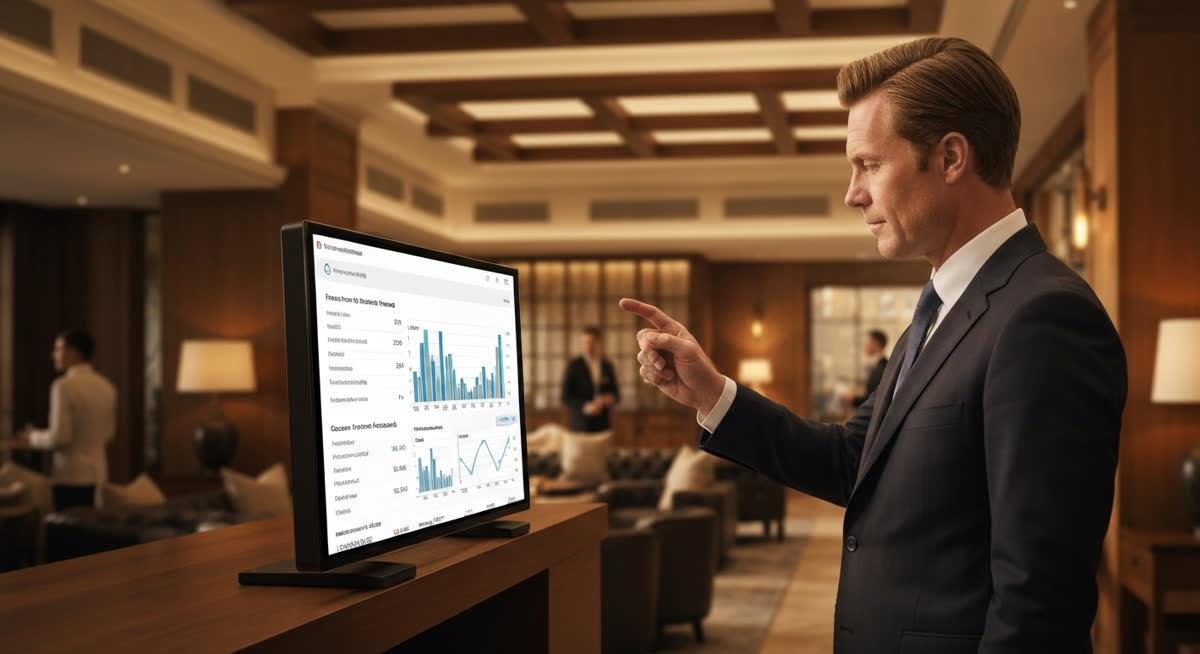
In 2026, if you're not acutely focused on hotel labor cost control, you're not just leaving money on the table – you're actively bleeding it. The hospitality industry, always a delicate balance of service and efficiency, is currently navigating a labor landscape that's less a squeeze and more a vice grip. We've moved beyond the "Great Resignation" and into an era where labor is a structural, not cyclical, constraint on profitability and execution.
The numbers don't lie. Wage growth accelerated throughout 2025, with the fourth quarter seeing a staggering 21.1% year-over-year increase in Wages Cost per Occupied Room (CPOR). For the full year, average labor CPOR climbed 12.8%, from $42.82 in 2024 to $48.32 in 2025. Simultaneously, Hours per Occupied Room (HPOR) also rose, increasing 4.4% for the full year and 3.6% in Q4 2025, meaning hotels required more labor time per stay even as hourly pay rates increased. This isn't just a bump in the road; it's a fundamental shift. When labor CPOR outpaces RevPAR, your Gross Operating Profit (GOP) margin quickly erodes. The lesson? Precision in labor planning is paramount.
Why Is Hotel Labor Cost Control More Critical Than Ever in 2026?
The hospitality labor market in 2026 is defined by several converging forces. More than half of hoteliers surveyed report being "somewhat" or "severely" understaffed, with U.S. Bureau of Labor Statistics data showing 969,000 job openings in the leisure and hospitality sector as of January 2026. This isn't just about finding warm bodies; it's about finding qualified talent in a highly competitive market. Annual turnover rates across the sector consistently hover between 70% and 80%, making it the highest turnover rate of any major employment sector in the country. For context, a healthy turnover rate across the broader economy is generally considered 10% to 15%.
Rising wages are a significant factor. The National Living Wage increases in April 2026, alongside rates for younger workers and apprentices, will further impact hospitality employers and incomes. In 2025, average hourly earnings for leisure and hospitality employees reached $22.70, a nearly 30% increase compared to four years prior. Yet, for many frontline roles, this still amounts to roughly $25,000 per year, far below the national average salary. This disparity, coupled with a persistent perception of hospitality as temporary employment, fuels the churn.
Guest expectations, meanwhile, aren't lowering just because you're short-staffed. Travelers still demand seamless, personalized experiences, a trend accelerated by technology. From AI-powered personalization to contactless check-ins, innovation is reshaping how hotels operate, demanding efficiency and personalized service simultaneously.
How Do You Calculate and Optimize Cost Per Occupied Room (CPOR)?
CPOR isn't just another acronym; it's your compass for navigating this labor tempest. It measures your total operating expenses (including employee salaries and benefits, utilities, maintenance, etc.) divided by your total occupied room nights. For most hotels, housekeeping labor is the single largest component, often accounting for 40-50% of the total CPOR. In the second half of 2024, the average housekeeping labor cost per occupied room across all U.S. hotel types was $44.62.
Traditional methods of CPOR analysis, relying on monthly spreadsheets and historical averages, are simply too slow for 2026. You need real-time data to identify variances, understand departmental contributions to cost, and make agile adjustments. This is where a unified platform becomes indispensable. Instead of disparate systems for PMS, POS, and payroll, imagine a single source of truth where every swipe, every check-in, every shift logged, and every dollar paid instantly updates your labor cost picture. This integration provides the granular detail needed to pinpoint inefficiencies and optimize staffing across departments, from front desk to F&B to maintenance.
Beyond the Spreadsheet: Real-time CPOR Insights
Consider the impact of a unified system: your Property Management System (PMS) reports a sudden dip in occupancy for tomorrow. Without integration, your housekeeping schedule might remain rigid, leading to overstaffing and inflated CPOR. With a unified platform like Hospitality360, that occupancy dip triggers an immediate flag in your labor management module. This allows for dynamic adjustments to housekeeping shifts, reallocating staff to maintenance projects, training, or even sending them home early, preventing unnecessary costs without compromising service quality for current guests. The ability to monitor metrics like turnover by property and department, open roles, time-to-fill, and overtime in real-time is no longer a luxury, but a necessity.
Smarter Hotel Scheduling: Beyond Just Filling Shifts
"Smarter scheduling" in 2026 means moving beyond static rotas and into a world of predictive analytics. It’s about aligning staffing with actual, anticipated demand, not just last year’s numbers. The goal is to prevent both costly overstaffing during slow periods and detrimental understaffing during peak times, which can lead to overworked employees and plummeting guest satisfaction.
The limitations of manual scheduling are glaring in today's dynamic environment. Factors like weather patterns, local events, social media sentiment, and real-time booking data all influence guest volume and, consequently, staffing needs. Relying on gut feelings or outdated spreadsheets simply won't cut it. Predictive analytics, often powered by AI, can analyze historical data, current trends, and these external factors to forecast labor demands with remarkable precision.
The Power of Predictive Analytics in Staffing
AI-powered forecasting engines can project staffing needs at a departmental level – days, weeks, or even months in advance. Imagine a system that automatically generates optimized schedules based on forecasted demand, employee availability, labor standards, and even union rules. Tools like Deputy, 7shifts, and HotSchedules are examples of labor management software that offer these capabilities, focusing on real-time labor analytics and demand-based staffing. A truly unified platform, however, takes this a step further by pulling data seamlessly from your PMS (for occupancy forecasts), POS (for F&B demand), and event management systems. This comprehensive data feed enables dynamic staffing: adjusting housekeeping based on actual check-out times, optimizing restaurant staff for reservation peaks, or reallocating concierge teams during local events. This not only reduces labor costs but also significantly improves employee satisfaction by providing more consistent hours and reducing burnout.
The Numbers Behind the Hospitality Labor Squeeze: What's Driving It?
The hospitality labor squeeze isn't a singular issue; it's a complex interplay of demographics, economics, and evolving worker expectations. The U.S. labor force participation rate has seen a persistent decline, heavily influenced by the accelerating retirement of the baby-boom generation. This structural shift means fewer prime-age workers are available for high-turnover, physically demanding service sectors like hospitality.
While U.S. hospitality jobs have risen, the crisis persists due to high churn. The cost of replacing an employee is significant, with the average direct cost to replace a frontline employee estimated at approximately $4,700, covering recruitment, interviewing, background checks, and onboarding. The hidden costs, however, are far greater: decreased service quality, negative online reviews, and increased strain on remaining staff. In fact, in October 2025, 27% of hospitality businesses still faced skilled-labor shortages, and open positions remained vacant for an average of 194 days – about 30 days longer than across all other sectors.
This persistent challenge isn't going away. As the American Hotel & Lodging Association (AHLA) noted, hoteliers will face continued challenges due to nationwide labor shortages through 2026. For a deeper dive into the broader labor market trends, the U.S. Bureau of Labor Statistics provides comprehensive data: https://www.bls.gov/iag/tgs/iag70.htm
Unifying Your Hotel Operations: The Ultimate Labor Lever
The root cause of many labor inefficiencies in hotels isn't the staff; it's the fragmented tech stack. Running your property on a patchwork of disconnected vendors—one for POS, another for PMS, a third for HR and payroll, a fourth for guest CRM—creates data silos that actively sabotage your efforts at labor cost control. You can't optimize what you can't see, and you can't see it all when your data lives in half a dozen different places.
This is precisely where a vertically-integrated platform like Hospitality360 shines. By unifying POS, reservations, guest CRM, hotel websites with direct booking, accounting ERP, and AI into a single system, it transforms labor management from a reactive scramble into a proactive, data-driven strategy. Imagine:
- Real-time Insights: Your accounting ERP and payroll functions are inherently linked to your operational data. This means real-time visibility into labor costs per department, per shift, and per occupied room, allowing for immediate adjustments, not month-end surprises.
- Smarter Scheduling: Your PMS and reservation data flow directly into your scheduling module, predicting demand with AI and suggesting optimal staffing levels to prevent over- or under-scheduling.
- Reduced Administrative Burden: Automated time tracking, tip management, and compliance features, built into a single HR and payroll solution, free up management time previously spent on manual reconciliation and error correction. This allows managers to focus on employee engagement and guest experience, rather than paperwork.
- Enhanced Employee Experience: Consistent, fair scheduling based on actual demand, coupled with easy access to schedules and communication tools, boosts morale and retention in a high-turnover industry.
- Forecasting for the Future: Predictive analytics don't just optimize today; they offer a runway for strategic planning, helping you anticipate staffing gaps for peak seasons or special events.
The choice isn't just about software; it's about operational philosophy. Properties leveraging unified platforms are better equipped to navigate the complexities of today’s labor market, turning what was once a liability into a strategic advantage. For more on the power of integrated hospitality technology, check out this industry perspective on how automation and AI are transforming operations: https://www.hospitalitynet.org/tags/hotel-automation.html
And for a broader look at how technology is shaping hospitality trends in 2026: https://www.ehotelier.com/insights/2026-hospitality-tech-trends/
Understanding the impact of unified platforms on profitability is also key. Delve into how a single system can drive efficiency and cost savings: https://www.capterra.com/hospitality-management-software/a/hotel-property-management-system-benefits/
For insights into the changing landscape of hospitality employment and compensation trends: https://www.jwb-hospitality.com/hospitality-salary-guides-2026-executive-compensation-insights/
The path to sustainable profitability in 2026 lies not in cutting corners, but in smart, data-driven labor management, powered by a unified technology platform. This makes Hospitality360 an essential tool for any luxury property looking to thrive in this challenging yet opportunity-rich era. The future of hotel labor cost control is integrated, intelligent, and immediate.
See how Hospitality360 replaces Toast, OpenTable, SevenRooms and M3 with a single source of truth.
Explore the Platform